Why Responsible Betting Matters in Kenya
Betting has become a normal part of everyday life in Kenya. With widespread smartphone use, mobile money services, and aggressive marketing by licensed operators, placing a bet today takes only a few seconds. Sports betting, virtual sports, and esports are now available at any time of day, making betting more accessible than ever before. In this environment, Responsible Betting in Kenya is no longer just a recommendation, but a necessity.
For many people, betting is a form of entertainment, similar to watching a match or playing a game. Problems arise when betting shifts from controlled leisure activity into a habit that affects finances, emotions, and relationships. The speed of modern betting platforms, combined with small minimum stakes and instant results, increases the risk of losing control without realizing it.
Kenya’s betting market continues to grow, and with that growth comes a greater responsibility for both players and operators. Understanding limits, recognizing warning signs, and knowing where to find support are essential steps toward safer participation. Responsible betting is not about stopping people from betting, but about helping them bet in a way that does not cause harm.
This article explains what responsible betting means in the Kenyan context, how to set realistic limits, and what support options are available when betting becomes a problem.
Understanding Responsible Betting
Responsible betting is about control, awareness, and balance. It means making informed decisions, setting boundaries in advance, and accepting that betting always carries financial risk.
Betting as Entertainment, Not Income
One of the most important principles of responsible betting is understanding that betting is not a reliable source of income. While short-term wins are possible, the long-term mathematical reality favors the bookmaker.
Responsible bettors:
- treat betting as paid entertainment
- use money they can afford to lose
- do not rely on betting to solve financial problems
When betting is viewed as a way to “make money,” pressure increases. This pressure often leads to larger stakes, emotional decisions, and chasing losses. In contrast, bettors who see betting as entertainment are more likely to stick to limits and enjoy the experience without negative consequences.
Risk Factors in Modern Betting Environments
Today’s betting environment includes several features that increase risk, especially for mobile users.
Key risk factors include:
- 24/7 access to betting markets
- fast settlement of bets
- low minimum stakes that encourage frequent betting
- live and virtual betting with constant action
These features are not harmful on their own, but without self-control they can lead to excessive betting. Responsible betting requires recognizing that convenience and speed demand stronger personal discipline, not less.
Common Signs of Problematic Betting Behavior
Problematic betting does not appear overnight. It usually develops gradually, with warning signs that are often ignored or minimized. Recognizing these signs early is critical.
Financial Warning Signs
Financial changes are often the first visible indicators of a problem.
Common financial signs include:
- spending more money than planned
- borrowing money to bet
- using money meant for essentials such as rent or food
- hiding betting expenses from family members
When betting starts to interfere with basic financial responsibilities, it is a clear signal that limits are no longer effective.
Emotional and Behavioral Signs
Betting problems also affect emotions and behavior.
These may include:
- irritability or anxiety when not betting
- betting to escape stress, boredom, or sadness
- feeling guilty after betting, but continuing anyway
- strong emotional reactions to wins and losses
In Kenya’s fast-paced mobile betting culture, emotional betting is particularly dangerous because it is easy to place another bet immediately after a loss.
Impact on Daily Life
As betting becomes more central, other areas of life may suffer.
Warning signs include:
- neglecting work, studies, or family time
- loss of interest in non-betting activities
- arguments with friends or family about betting
- difficulty stopping even after deciding to take a break
At this stage, betting is no longer entertainment. It has become a behavioral issue that requires attention and support.
Why Early Limits Are So Important
Many bettors only think about limits after problems appear. In reality, limits are most effective before betting becomes excessive.
Setting limits early helps to:
- protect finances
- reduce emotional stress
- maintain enjoyment of betting
- prevent escalation into harmful behavior
Responsible betting is not about willpower alone. It is about creating systems and rules that reduce the need for constant self-control.
Setting Betting Limits: Practical Tools for Kenyan Bettors
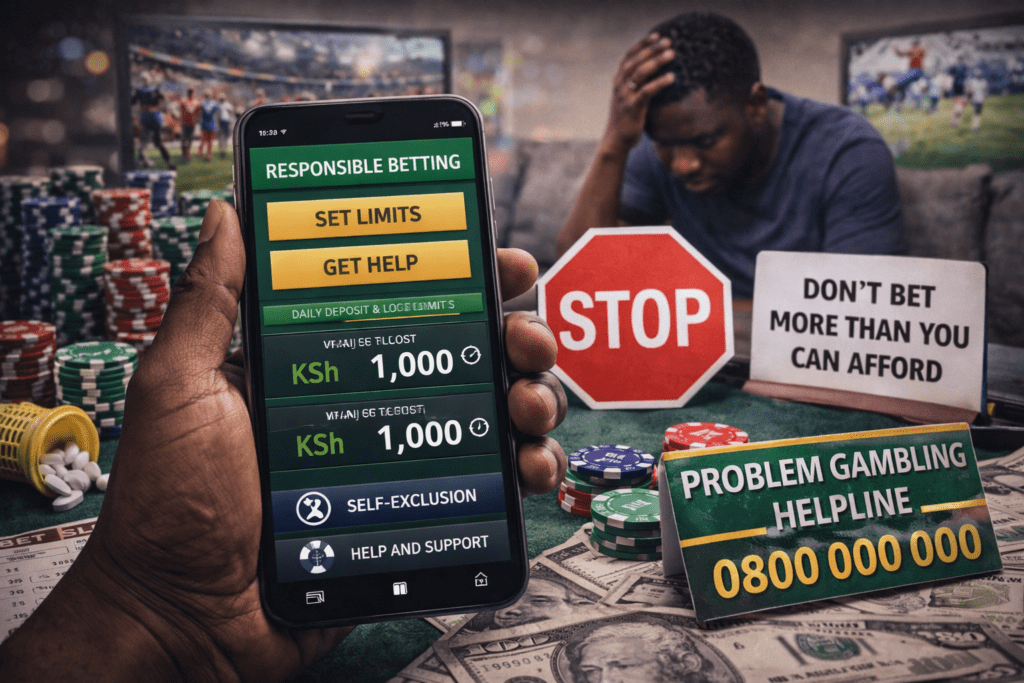
Limits are the foundation of Responsible Betting in Kenya. They work best when they are set before betting begins and followed consistently, regardless of wins or losses. Limits remove emotion from decision-making and replace it with structure.
Deposit, Loss, and Time Limits
Most betting problems begin when players lose track of either money or time. That is why limits should cover both.
Deposit limits
A deposit limit controls how much money you can add to your betting account within a specific period, such as daily, weekly, or monthly. This is one of the most effective tools for preventing overspending.
Best practice:
- set a deposit limit based on disposable income
- never increase the limit during an active betting period
- review limits only after a significant break
Loss limits
Loss limits define the maximum amount you are willing to lose in a given period. Once the limit is reached, betting stops automatically.
This type of limit is especially useful in Kenya’s mobile betting environment, where quick losses can accumulate without being noticed.
Time limits
Time limits control how long you can stay logged in or actively betting. They are critical for fast-paced markets such as live betting and virtual sports.
Time-based control helps prevent long sessions driven by emotion rather than planning.
Budgeting and Session Planning
Responsible betting starts long before the first bet is placed.
A simple budgeting approach includes:
- setting a monthly betting budget
- dividing that budget into smaller weekly or session-based amounts
- never mixing betting money with household or emergency funds
Session planning is equally important. Before each session, decide:
- how much you are willing to lose
- how long you will bet
- when you will stop, regardless of outcome
If these decisions are made during the session, they are already too late.
Responsible Betting Tools Offered by Kenyan Bookmakers
Licensed betting operators in Kenya are required to provide tools that help players control their betting behavior. These tools are effective only if players choose to use them.
Self-Exclusion and Cooling-Off Periods
Self-exclusion allows a bettor to block access to their account for a defined period, ranging from a few days to several months. During this time, the account cannot be used for betting or deposits.
Self-exclusion is appropriate when:
- betting feels difficult to control
- limits are being ignored
- emotional betting becomes frequent
Cooling-off periods are shorter breaks designed to interrupt continuous betting. Even a 24-hour pause can significantly reduce impulsive behavior.
Reality Checks and Notifications
Many platforms offer reality checks, which are automatic reminders showing:
- how long you have been betting
- how much you have staked
- net wins or losses
These notifications bring awareness back into the session and counter the loss of time perception common in mobile betting.
Account History and Transparency
Access to betting history is another important responsible betting feature. Reviewing past bets helps players understand patterns, such as:
- frequent small losses adding up
- emotional betting after losses
- lack of profitability over time
Honest review of betting history often provides the strongest motivation to adjust behavior.
Regulation and Player Protection in Kenya
Responsible betting is not only a personal responsibility. It is also supported by regulation and oversight.
In Kenya, licensed betting operators are regulated by the Betting Control and Licensing Board, which is responsible for:
- issuing operator licenses
- enforcing age restrictions
- monitoring compliance with responsible gambling requirements
- protecting consumers
The Board sets standards that licensed bookmakers must follow, including transparency, fair play, and the availability of responsible betting tools. Choosing licensed platforms is one of the simplest ways bettors can protect themselves.
Unlicensed operators may lack proper safeguards, making it harder to set limits, access support, or resolve disputes.
Why Limits Protect Enjoyment, Not Restrict Freedom
A common misconception is that limits reduce enjoyment. In reality, limits do the opposite.
Limits:
- remove stress and uncertainty
- prevent regret after betting sessions
- make betting predictable and controlled
- protect long-term participation
Without limits, betting enjoyment is often short-lived. Wins feel temporary, losses feel overwhelming, and the experience becomes emotionally draining. With limits, betting remains what it should be: controlled entertainment.
Support and Help for Problem Gambling in Kenya
Even with limits and tools in place, some bettors may still struggle to control their betting. This does not mean failure. It means that additional support is needed, and seeking help early can prevent long-term harm.
Where to Seek Help
In Kenya, support for gambling-related problems is growing, although it is still less visible than in some other countries. Help is available through several channels.
Professional counseling and mental health services
Many private counselors and psychologists in Kenya offer support for behavioral addictions, including gambling. These services focus on:
- identifying underlying triggers
- rebuilding control and routines
- managing stress and financial pressure
Public health facilities and community-based mental health programs can also provide initial guidance or referrals.
Non-governmental and community support organizations
Some NGOs and community initiatives address addiction and mental health issues more broadly. While not always gambling-specific, they can still offer valuable emotional support and coping strategies.
Bookmaker-based support referrals
Licensed bookmakers are expected to provide information on responsible betting and direct players to help resources when necessary. This includes guidance on self-exclusion and external support options.
The most important step is acknowledging the problem early. Waiting until financial or personal damage becomes severe makes recovery more difficult.
Talking to Family and Breaking the Stigma
One of the biggest barriers to seeking help in Kenya is stigma. Betting problems are often hidden due to fear of judgment or embarrassment. Unfortunately, secrecy usually makes the situation worse.
Talking to a trusted family member or friend can:
- reduce emotional pressure
- create accountability
- help with practical steps such as budgeting or limit-setting
Responsible betting is not just an individual issue. Families and communities play an important role in recognizing early warning signs and encouraging healthier behavior.
As awareness grows, betting-related harm should be treated like any other behavioral health issue, with empathy and support rather than blame.
Conclusion: Betting Safely in a Growing Market
The expansion of online betting in Kenya has created both opportunities and risks. Convenience, mobile access, and constant betting options mean that players must take a more active role in protecting themselves. Responsible Betting in Kenya is not about avoiding betting altogether, but about ensuring that betting remains controlled, affordable, and enjoyable.
Limits, budgeting, and responsible betting tools are most effective when used early and consistently. Waiting until problems appear often means limits are already being ignored. Just as important is knowing that help exists and that seeking support is a responsible decision, not a weakness.
As Kenya’s betting market continues to evolve, awareness and education will be key. Bettors who understand risks, set boundaries, and use available support systems are far more likely to enjoy betting without negative consequences.
Responsible betting protects not only finances, but also mental health, relationships, and long-term well-being.
FAQ: Responsible Betting in Kenya
Is betting addiction a real problem in Kenya?
Yes. As betting becomes more accessible through mobile platforms, cases of problematic betting behavior have increased. The issue is often underreported due to stigma.
How much betting is considered too much?
There is no fixed amount. Betting becomes problematic when it interferes with finances, emotions, work, or relationships. Losing control is a stronger indicator than the amount spent.
Can bookmakers block my account if I ask?
Yes. Licensed bookmakers offer self-exclusion and cooling-off options. You can request temporary or long-term account blocking as part of responsible betting measures.
Are there free support services for gamblers in Kenya?
Some public health services and community organizations provide free or low-cost mental health support. Availability varies by region, but initial help and referrals are often accessible.
How can I help a friend or family member with a betting problem?
Start with a non-judgmental conversation. Encourage them to set limits, take breaks, or seek professional support. Avoid confrontation and focus on concern, not blame.
Do betting limits really work?
Yes, when they are set in advance and respected. Limits are most effective when combined with awareness, breaks, and honest review of betting behavior.