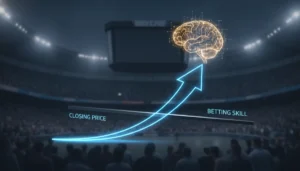

The Markets You Know Best Are the Ones Bleeding You Dry
There is a particular kind of punter loss that rarely gets examined honestly: the money that disappears in markets where the bettor feels most confident. Not the exotic bets, not the long-shot accumulators, but the straightforward match result selections and Both Teams to Score markets that form the backbone of football betting Kenya punters engage with every single week. These are the bets placed with the most conviction. They are also, systematically, where the most money leaks.
The reason is not bad luck. It is not bookmaker manipulation. It is something more structural, and once it is understood clearly, it changes how a serious punter approaches every familiar fixture on the card.
Why Deep Football Knowledge Creates a Specific Blind Spot
Following the Premier League closely is genuinely useful knowledge in many contexts. Knowing that a striker is out of form, that a club has won four home games in a row, or that a particular manager sets up defensively against top-six opposition — all of that is real information. The problem is that punters tend to treat this kind of contextual knowledge as a substitute for probability assessment rather than an input into it.
When someone watches a team regularly and builds a strong narrative around them, every new fixture gets filtered through that narrative. Arsenal look dominant right now. Manchester City always respond after a bad result. A punter holding those mental models does not calculate the actual likelihood of a specific outcome occurring. They confirm what they already believe, then attach odds to it after the fact. The betting slip becomes a statement of opinion, not a structured probability judgment.
This is where familiarity actively works against the bettor. Surface-level knowledge produces strong feelings about outcomes. Strong feelings produce overestimated probabilities. Overestimated probabilities mean punters consistently accept odds that do not reflect genuine value — and they do it with full confidence every time.
How Bookmakers Price the Markets Punters Overuse
Match result and BTTS are not priced loosely. They are among the most heavily modelled markets any bookmaker operates, precisely because they attract the highest volume of recreational action. The margins built into these markets are carefully set to absorb the kind of narrative-driven betting described above.
A punter selecting a home win because the team looks strong in recent weeks is not engaging with the same information set the bookmaker’s pricing model used. The model factored in goal expectation data, squad depth, schedule fatigue, opponent defensive metrics, and historical variance across hundreds of similar fixtures. The punter factored in last Saturday’s highlights and a confident feeling about the lineup.
That asymmetry is not occasional. It is the default condition every time a bettor relies on familiarity rather than working through the actual numbers behind a selection. The overconfidence is invisible from the inside, which is precisely what makes it so expensive over time.
Understanding why this happens structurally — at the level of how the brain processes repeated exposure to familiar teams and competitions — reveals the exact mechanism that needs to be addressed before any betting strategy can hold up under real market conditions.
The Cognitive Mechanism That Makes Familiar Markets Dangerous
The brain does not process familiar information and unfamiliar information the same way. When a punter encounters a fixture involving a team they follow closely, the cognitive load drops significantly. Recognition kicks in, pattern matching accelerates, and the mental effort required to form a view feels minimal. This ease of processing is known in behavioural psychology as cognitive fluency, and it carries a side effect that punters almost never account for: things that feel easy to think about also feel more likely to be true.
A Kenyan punter who has watched Chelsea play forty times in a season will form an opinion about their next fixture within seconds. That speed feels like competence. It is actually familiarity masquerading as analysis. The same punter asked to assess an unfamiliar Estonian league fixture with no prior exposure would approach it more cautiously, seek out more data, and hold their prediction more loosely. Paradoxically, they would often make a more disciplined probability judgment on the bet they know less about.
This dynamic plays out across the entire lifecycle of a bettor’s experience with a particular league or competition. The more seasons they follow it, the more their opinions harden, the more automatic their selections become, and the less frequently they pause to question whether the odds on offer actually reflect what they believe. Expertise and overconfidence grow together in betting markets, feeding each other until the punter is staking significant money on conclusions they arrived at in thirty seconds.
BTTS and the Particular Problem of Selective Memory
Both Teams to Score markets attract a specific version of this problem. Punters who follow attacking football closely tend to remember the open, entertaining fixtures far more vividly than the cagey, low-scoring ones. A 3-2 thriller lodges in memory. A 1-0 grind does not generate the same emotional trace. Over time, this selective retention warps a punter’s internal model of how frequently goals actually occur in a given competition or between a specific pair of teams.
When BTTS yes is priced at roughly even money, it looks reasonable to someone whose mental highlight reel is full of open games. What that punter is not accounting for is that in most top European leagues, BTTS yes lands somewhere between 48 and 54 percent of fixtures across a full season — and bookmakers price accordingly. The punter perceives value where none exists because their reference pool is built from memorable moments rather than actual frequencies.
The practical consequence is a consistent pattern of slightly mispriced selections made with high conviction. No single bet destroys a bankroll. The damage accumulates across dozens of confident BTTS selections placed over weeks and months, each one grounded in a mental model shaped more by memorable exceptions than by baseline rates.
What Separates Punters Who Break This Pattern
The punters who manage to escape the familiarity trap share a specific habit: they treat their initial intuitive reaction to a fixture as a starting point for scrutiny rather than a conclusion to be justified. When the gut says home win with confidence, the disciplined approach is to work backwards and ask what probability that confidence actually implies, then compare it honestly against the bookmaker’s implied probability embedded in the odds.
This comparison is where most narrative-driven bets collapse under examination. A punter who feels strongly that a home side will win might discover their conviction implies a 70 percent probability, while the bookmaker’s odds reflect only 55 percent. At that point, there are only two possibilities: either the punter has genuinely identified an edge the market has missed, or their confidence is inflated by familiarity rather than grounded in superior information. The honest answer, most of the time, is the latter.
Building this habit requires a deliberate structural change in how selections are approached. Rather than starting with the team and building toward a decision, serious punters start with the odds, convert them into implied probabilities, and then ask whether their actual analysis — not their narrative, their analysis — supports a meaningfully different number. That discipline is uncomfortable precisely because it strips away the sense of expertise that following a league closely tends to produce. But it is the only reliable way to stop familiar markets from quietly extracting money that a punter never notices leaving.
Stopping the Leak Before It Becomes a Flood
The uncomfortable truth for most Kenyan punters operating in match result and BTTS markets is that the problem is not their football knowledge. Their football knowledge is probably genuine. The problem is the unexamined assumption that knowledge of a sport translates automatically into an edge in pricing that sport’s outcomes. Those are two entirely different skills, and conflating them is where the money goes.
Bookmakers do not build margins into these markets by accident. They build them precisely because high-familiarity markets generate high volumes of confident, narrative-driven action from punters who have stopped questioning their own assessments. Every time a bettor skips the step of converting odds into implied probability and comparing it against a reasoned estimate, they are effectively donating the margin the bookmaker built in for exactly that kind of shortcut.
The shift required is not complicated in theory, though it demands consistency in practice. Before any selection in a familiar market, the honest question is not whether you believe this team will win or both sides will score. The question is whether your belief, expressed as a probability, is meaningfully higher than what the odds are already offering. If there is no clear, data-supported reason to say yes, the selection has no edge — regardless of how strongly it feels like the right call.
Punters who build this single habit into their process will find that it eliminates a significant portion of their weekly bet volume. That elimination is not a loss of opportunity. It is the recognition that most confident selections in well-known markets are not bets at all in any meaningful sense — they are opinions dressed up as investment. Reducing the frequency of those selections is, by itself, one of the most effective bankroll preservation strategies available. For a deeper understanding of how implied probability works in practice and why it should anchor every serious betting decision, Pinnacle’s guide to implied probability offers a rigorous and accessible breakdown worth studying carefully.
The markets that feel most familiar will always carry the gravitational pull of false confidence. Recognising that pull for what it is — a cognitive distortion rather than a signal — is what separates punters who sustain themselves over time from those who remain perpetually surprised that the bets they were most certain about keep finding ways to lose.