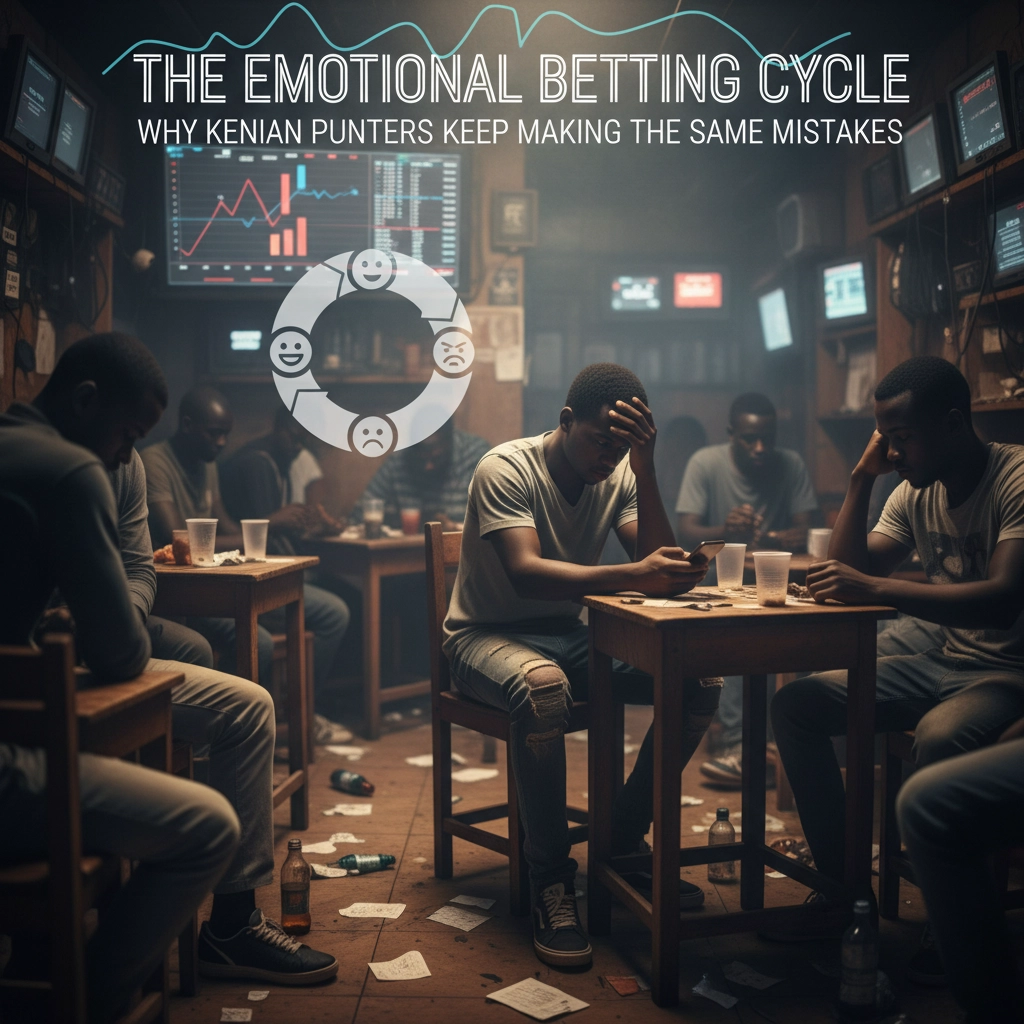
The Pattern Isn’t Random — It’s Predictable
Most Kenyan punters who review their betting history find something uncomfortable: the worst bets weren’t placed out of ignorance. They were placed in a specific emotional state — right after a big win, deep into a losing run, or while watching a live match with the clock ticking. The football knowledge was there. The mistake wasn’t about the game. It was about the mental condition in which the decision got made.
This is the part of betting psychology Kenya punters rarely discuss openly, yet it explains more losing weeks than bad form guides or wrong predictions ever do. Emotion triggers a near-identical sequence of decisions that repeats across different punters, different weeks, and different markets. Once that sequence becomes recognizable, it becomes interruptible.
The three emotional states driving this cycle are overconfidence after wins, frustration after losses, and urgency during in-play betting. Each distorts decision-making in a distinct way, but they share the same outcome: a bet placed at poor value, often at inflated stakes, with less analysis than the punter would normally apply.
How Overconfidence After a Win Quietly Inflates Your Stakes
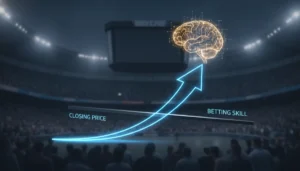
Winning produces a specific cognitive distortion. After a correctly predicted accumulator or a well-read correct score market, the brain doesn’t register probability playing out — it registers confirmation of skill. The punter who nailed a Champions League result on Tuesday genuinely feels sharper heading into the weekend. That feeling actively changes behavior.
The most common expression is stake inflation. A punter who normally places 200 shillings suddenly finds 500 shillings reasonable, not because the value justifies it, but because recent success has recalibrated their sense of risk. The selection process also loosens. Bets that would ordinarily require more research get placed on the strength of momentum. Accumulators get longer. Margins get thinner. The overconfident punter isn’t being reckless consciously — they’re operating with a distorted baseline of what constitutes a reasonable bet.
What makes this state particularly damaging is its timing. Overconfidence arrives precisely when the bankroll is strongest, meaning the financial consequences of inflated, careless bets are significant. A bad run following a winning streak often wipes out more than the streak earned — not because luck reversed, but because stake discipline quietly collapsed first.
Frustration After Losses and the Mechanics of Chasing
Frustration operates through a different mechanism but produces an equally predictable outcome. When a punter loses several bets in sequence, the emotional response isn’t simply disappointment — it’s cognitive pressure to resolve the imbalance. The mind frames the situation as a debt that needs correcting, and that framing drives chasing behavior.
Chasing losses rarely looks like obvious desperation. More often it presents as urgency dressed up in analysis. The punter searches for the next match with particular intensity, convinced a stronger selection will recover the deficit. Stakes rise to compress the timeline of recovery. High-odds markets — correct scores, first goalscorer, exact half-time results — become attractive because the potential return feels proportionate to the pressure being felt.
Frustration narrows attention, accelerates decisions, and manufactures false confidence in long-shot markets. Recognizing what it actually does to the selection process is the foundation for interrupting it — which leads directly to the third emotional state: in-play urgency.
In-Play Urgency and Why Live Markets Are Designed to Exploit It
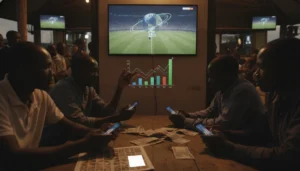
In-play betting introduces real-time emotional pressure synchronized with unfolding events. When a punter watches odds shifting by the minute, the psychological environment is completely different from analysing statistics the evening before. The screen is moving. The clock is running. The awareness that others are placing bets right now creates social urgency that compounds individual pressure.
The pattern in-play urgency triggers is impulsive entry into markets without adequate processing time. A punter watches a team dominate the first twenty minutes with the scoreline at 0-0. The live odds offer that team at reasonable value. The instinct says: act now before the price moves. What that instinct bypasses is that live odds have already accounted for territory and possession data — the market has processed what the punter is processing, and faster. The sense of spotting something before it disappears is frequently an illusion constructed by time pressure, not genuine value identification.
In-play urgency also interacts dangerously with the other two states. A punter riding overconfidence brings a looser selection process into a live environment that demands sharper judgment. A punter chasing losses finds in-play markets magnetic because their pace creates the illusion that recovery can happen quickly. In-play betting doesn’t just generate its own poor decisions — it amplifies the poor decisions already in motion.
The Repeatable Sequence That Connects All Three States
The three emotional states rarely operate in isolation. They form a recognizable sequence across a session or week, and once visible, their arrival can be anticipated rather than experienced as an unexpected spiral.
- A winning streak inflates confidence and loosens stake discipline.
- The inflated bets, placed with reduced scrutiny, begin to lose — triggering frustration and the pressure to recover.
- Chasing behavior accelerates betting, pulling the punter toward higher-odds markets and larger stakes.
- In-play opportunities appear, and urgency compounds the already-compromised decision-making.
- The final bets of the cycle are placed in the worst possible mental state: overextended, emotionally reactive, and time-pressured simultaneously.
Most punters who trace their worst sessions backwards will recognize this arc. The individual bets feel like separate decisions at the time. In retrospect, they belong to a single unbroken chain of emotional escalation.
Identifying the Moment Before the Bet — Where Interruption Is Actually Possible
The practical value of understanding this sequence lies not in avoiding emotion entirely, but in recognising which emotional state is present in the moment before a bet is confirmed. That specific moment — between decision and placement — is where the pattern is most interruptible.
A useful starting point is reading internal signals rather than external justifications. When a punter notices they are building an argument for why a bet is good rather than evaluating whether it actually is, that distinction usually indicates emotion is driving the selection. The reasoning came second; the impulse came first. That reversal is a reliable indicator that overconfidence, frustration, or urgency is operating beneath the surface.
Practically, this means treating certain internal conditions as temporary disqualifications from betting. Recognising a post-win confidence spike, the tension of chasing a loss, or the compressed urgency of a live market — and choosing to pause rather than proceed — changes the conditions under which the next bet gets placed in a way that no prediction system or odds comparison tool ever can.
The Punter Who Recognises the Pattern Already Has an Advantage
Betting discipline is often framed as willpower — the idea that a punter simply needs to want to make better decisions badly enough. That framing misunderstands how emotional states work. Willpower applied against an unrecognised emotional current rarely wins. Recognition applied before that current takes hold almost always does.
Building that recognition into a practical habit means keeping an honest record — not just of outcomes, but of the emotional context surrounding notable bets. Whether the session followed a winning run, whether losses had already accumulated, whether a live match was running in the background. Over time, those notes construct a personal evidence base that makes the pattern undeniable. Most punters who go through this exercise find the same two or three emotional triggers appearing repeatedly behind their most regrettable bets.
For anyone looking to go deeper on the psychological mechanisms behind betting decisions, the GambleAware guidance on gambling and mental health provides a thorough, evidence-based framework that extends well beyond what any betting strategy article can cover.
The sequence — win, inflate, lose, chase, escalate, regret — is not a character flaw. It is a documented psychological pattern that emerges reliably when emotional states go unmonitored during financial decision-making. Understanding it requires only the habit of pausing long enough to ask which version of yourself is placing this bet: the one working from analysis, or the one working from emotion.
That question, asked consistently and honestly at the moment before confirmation, is worth more than any tipster service, form guide, or statistical model. It addresses the actual source of most losses — not the predictions that went wrong, but the conditions under which the decisions were made.