
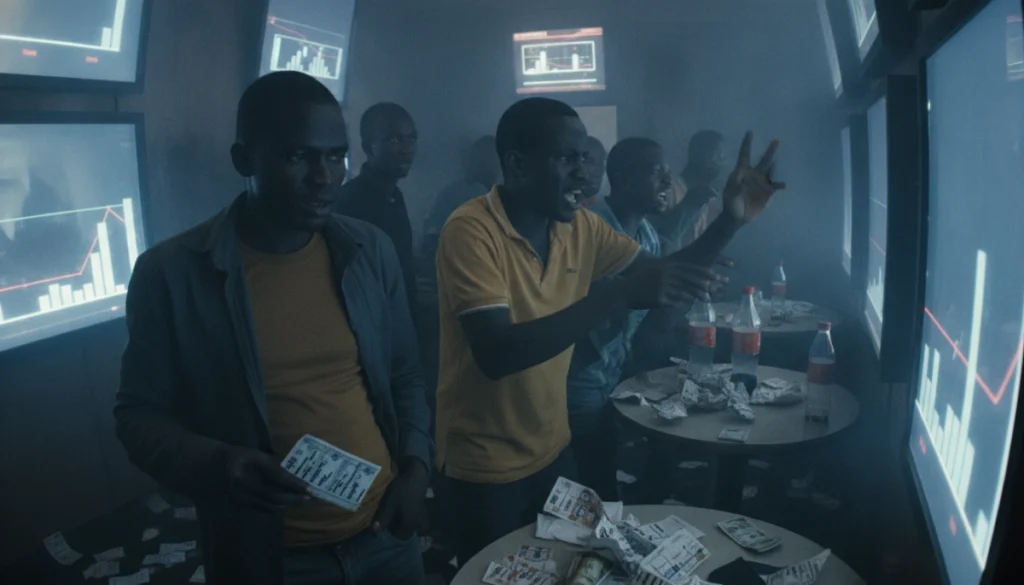
The Money Is Already Gone — But the Brain Refuses to Accept It
A punter loses three accumulators before 4 PM on a Saturday. The selections were reasonable, the analysis was sound, and the results went against him through late goals and one defensive error no pre-match reading could have anticipated. By any objective measure, that is a normal Saturday. But instead of closing the app, he opens it again — not because he has found a better opportunity, but because he feels he needs to win back what he lost. That feeling, not logic, drives the next three bets.
This is sunk cost thinking at work. The sunk cost fallacy is the tendency to factor already-spent, irrecoverable resources into future decisions where those resources are mathematically irrelevant. In structured financial decisions, people recognise the trap more easily. In football betting, where emotion runs alongside every ninety minutes, it closes almost invisibly.
Why Lost Money Feels Like a Debt That Must Be Repaid
The core mechanism is psychological, not mathematical. When a punter loses money, the brain does not immediately categorise it as gone. It registers the loss as an open account — something unresolved that still requires action. Behavioural economists call this loss aversion: losses are felt roughly twice as intensely as equivalent gains. A 500 shilling loss produces a sharper emotional response than a 500 shilling win produces satisfaction.
This imbalance creates pressure. The punter is not simply trying to make money on the next bet — he is trying to neutralise a feeling. That shift in motivation is where the damage compounds. Decisions made to recover a loss operate under a completely different objective than decisions made to find value. One is analytical. The other is emotional. They rarely produce the same bet.
This pattern is particularly common during weekend football sessions, where punters place their first bets early and watch losses accumulate across afternoon fixtures. By evening, the original staking plan has been abandoned and bet sizes have increased — not because market value has improved, but because a larger return is now needed to zero out the day’s losses.
How Sunk Cost Logic Overrides Pre-Match Analysis
What makes sunk cost thinking especially destructive is that it does not announce itself. A punter does not consciously think, “I am making an irrational decision based on money I cannot recover.” He thinks, “There is still time to turn this around.” The framing shifts from seeking value to seeking rescue, and that reframing changes which bets get placed.
Selections previously rejected — long odds, unfamiliar leagues, high-variance correct score markets — suddenly become attractive because their higher returns bring the recovery target within reach. The punter is no longer filtering bets against his own analysis. He is filtering them against a loss figure that has no bearing on what any individual match is likely to produce.
The Behavioural Patterns That Emerge When Recovery Becomes the Goal
Once a punter shifts from seeking value to seeking recovery, a predictable sequence of behaviours follows. The psychology of loss, combined with the structure of a typical betting session, produces recognisable patterns that repeat across thousands of punters regardless of experience or bankroll size.
Stake Escalation as a Shortcut to Zero
The most immediate behaviour is stake escalation. A punter who began betting 200 shillings per match and has accumulated a 1,400 shilling deficit does not need complex reasoning to arrive at a single 1,500 shilling bet — the arithmetic feels clean. One win, and the day looks acceptable again. What this ignores is that the probability of the selection winning has not changed because the punter needs it to win.
Stake escalation also compresses the remaining bankroll into fewer bets, removing the statistical buffer that smaller, spread bets provide. A punter operating normally across ten bets has ten chances for outcomes to average out. A punter who consolidates remaining funds into two or three large recovery bets has eliminated that buffer entirely, with consequences far more severe than before.
Session Extension and the Refusal to Close
The second pattern is session extension — refusing to stop even when the original plan has run its course or the day’s budget is spent. Punters describe this as waiting for the right opportunity, but in practice they are waiting for an opportunity that returns their losses. Those are not the same standard.
Late-night fixtures from unfamiliar leagues, midweek reserve matches, and markets never normally considered suddenly become viable because they represent open windows. The sunk cost is now dictating which hours are spent betting and which competitions receive attention — variables that should be determined entirely by where genuine value exists.
Session extension is particularly damaging because fatigue compounds poor decision-making. The punter reviewing a 10 PM fixture from a South American second division is operating under both emotional pressure to recover and a cognitive state far less equipped to process information than it was eight hours earlier. These two factors consistently push outcomes in the same direction.
The Distortion of Confidence That Follows Each Near-Miss
Sunk cost thinking is further reinforced by the near-miss — the accumulator that fell on the final leg. Near-misses are not wins. Statistically, they are indistinguishable from any other loss because the staked money is equally unrecoverable whether the bet lost on the first match or the last. But the brain processes them differently, generating the sensation of almost succeeding and sustaining motivation to continue in a way a straightforward loss does not.
A punter who loses a five-fold accumulator on the final leg feels his analysis was largely correct — and partially, it was. But the conclusion is often flawed. He interprets the near-miss as evidence that persistence will eventually produce the full return. Four correct results do not make the fifth more likely next time, and the money lost remains entirely unrecoverable regardless of how close the outcome appeared.
Each near-miss refreshes the emotional investment in recovery, adding justification onto the original sunk cost. The punter is no longer just chasing a monetary deficit — he is chasing vindication for analysis that felt one result away from reward.
Breaking the Loop Before the Next Session Begins
The most consequential moment in any betting session is not the first bet — it is the point at which the original plan has run its course and the decision must be made whether to stop or continue. For a punter operating under sunk cost thinking, that decision has already been made by the losses themselves. Recognising that moment, and what is driving it, is the practical skill that separates disciplined bettors from those who perpetually end their weekends worse than they needed to.
The starting point is accepting — genuinely, not just intellectually — that money lost in a betting session has the same character as any other spent resource. The next bet inherits no obligation from the previous one. It is an entirely new financial decision that should be evaluated purely on whether the available odds represent value against the probability of the outcome occurring.
Practically, this means establishing session limits before the first bet is placed. A staking plan decided in advance — maximum bets, maximum outlay, a hard stop regardless of results — removes the in-session negotiation that sunk cost thinking exploits. When the limit has been reached, the decision has already been made.
It also means reviewing losing sessions against process rather than outcome. A punter who followed his analysis, staked within his plan, and lost to genuine variance has nothing to correct. A punter who abandoned his plan after the second loss and escalated into unfamiliar markets has identified an actionable problem — not in his selections, but in his response to adversity. Conflating the two, or treating every losing session as evidence the strategy needs changing, produces exactly the reactive decision-making that sunk cost thinking depends on.
Awareness of a bias does not automatically neutralise it. Knowing about the sunk cost fallacy does not prevent a punter from feeling its pull on a Saturday evening when three accumulators have already failed. What awareness provides is a moment of recognition — a brief window to identify the emotional pressure for what it is, separate it from the analytical question of whether the next bet represents genuine value, and make a decision that belongs to the present rather than one trying to rewrite the past. Understanding why these emotional pressures arise is a meaningful first step toward making decisions no longer held hostage by money that is already gone.
The losses from earlier in the day are a fixed point in the past, where no future bet can reach them. Every selection placed in pursuit of that fixed point is not a recovery attempt — it is a new risk taken under worse conditions than the session started with. Seeing it clearly does not make the feeling disappear, but it does make it possible to act differently. And in betting, acting differently at exactly that moment is where the real discipline lives.