
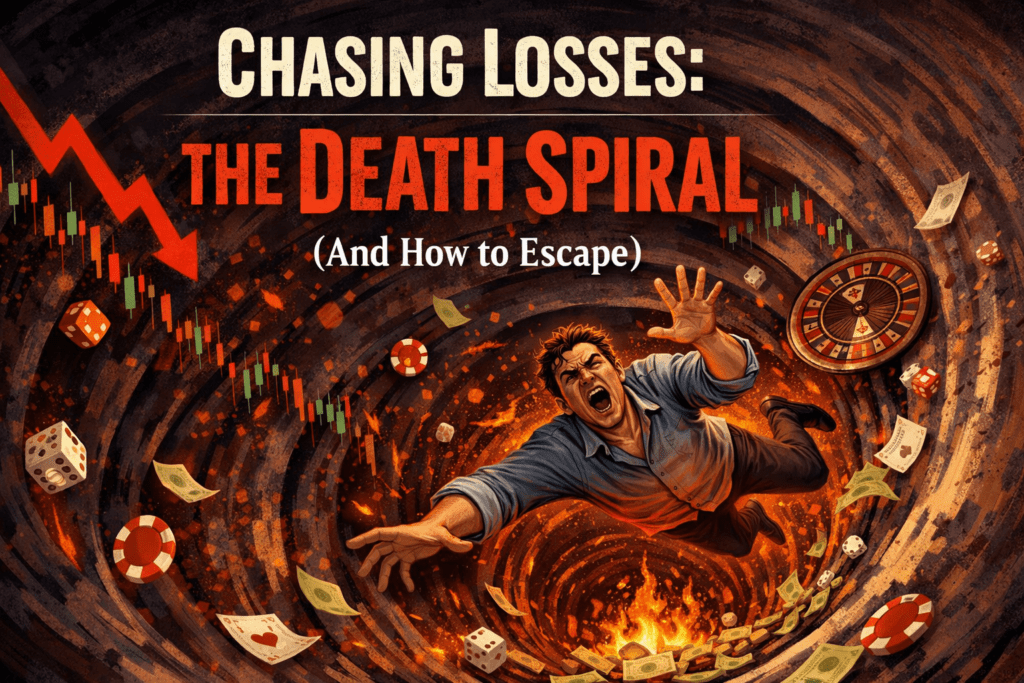
Chasing losses gambling, how the spiral begins
In betting and casino play, one pattern appears again and again regardless of experience level. It’s known as chasing losses gambling, and it’s one of the fastest ways to lose control.
It usually starts small. One lost bet, then another. Instead of stepping back, the player increases the stake, believing they’re “due” a win or just one step away from recovering.
At that moment, logic starts to fade and emotions take over.
The real danger is that this decision rarely happens just once. If the next bet also loses, the player often raises the stakes again. Each decision carries more pressure than the last.
What began as a controlled session turns into a chain reaction. This is where the spiral begins, and the longer it continues, the harder it is to stop.
What is the “death spiral” and why it’s dangerous
The “death spiral” describes a situation where a player keeps making increasingly risky decisions in an attempt to recover previous losses.
Typical signs include:
- constantly increasing bet sizes
- abandoning any structured plan
- ignoring real probabilities
- making fast, emotional decisions
The biggest problem is that every new bet carries more weight. Losses are no longer just financial, they become emotional.
At this point, the goal is no longer making a good decision. The goal becomes getting back to even. That mindset is a trap, and it often leads to even deeper losses.
The psychology behind chasing losses
Understanding the psychology is essential if you want to break this pattern.
Emotions, ego, and the need to “get even”
After a loss, many players feel a strong urge to fix the situation immediately. Ego plays a major role. No one likes to accept being wrong.
This emotional reaction leads to rushed decisions without proper analysis. Instead of evaluating the next bet objectively, the player is driven by the need to recover.
Cognitive biases that keep you stuck
Several mental traps reinforce this behavior:
- gambler’s fallacy, believing a win is “due”
- selective memory of past wins
- illusion of control over random outcomes
These biases create a false sense of confidence and keep the player engaged even when the odds are not in their favor.
A real-world example of the spiral in action
Imagine a player starts with a bankroll of 100 euros.
The first bet of 10 euros loses. The next bet is increased to 20, then 40. Within a few moves, more than half of the bankroll is gone.
At this point, the player is no longer thinking clearly. Every new bet has one goal, to recover losses.
Even if a small win happens, it’s rarely enough to stop. The player keeps going, thinking they’re close to breaking even.
This is exactly how the spiral sustains itself. It feeds on hope, urgency, and the refusal to accept a loss.
How to recognize you’re in trouble
There are clear warning signs that indicate you’re chasing losses:
- increasing stakes without a plan
- trying to recover losses immediately
- feeling frustrated, anxious, or pressured
- ignoring your own rules or limits
If you recognize these patterns, it’s a strong signal to stop.
How to escape the spiral of losses
Breaking the cycle requires a conscious decision.
Start with these steps:
- stop the session immediately
- take a break and step away from the platform
- review what happened without emotions
The most important shift is accepting that losses are part of the game.
You can’t recover everything in one session, and trying to do so is exactly what keeps the spiral going.
Long-term strategies to protect your bankroll
The best defense is prevention.
- set clear loss limits before you start
- use fixed bet sizes
- track your results consistently
- separate sessions instead of trying to recover in one go
A good rule is to risk only a small percentage of your bankroll per session, typically 5 to 10 percent.
Discipline is what protects your bankroll, not luck.
Conclusion, control beats impulse
Chasing losses gambling is one of the most dangerous habits in betting and casino play.
It doesn’t just drain your bankroll, it affects your decision-making and mindset.
The key difference between losing players and disciplined ones is simple. One reacts, the other controls.
You don’t need to win every session. You need to protect your bankroll and make good decisions.
That’s how you escape the spiral and stay in the game long term.
FAQ, chasing losses gambling
What is chasing losses?
It’s the act of increasing bets to recover previous losses.
Why is it dangerous?
Because it leads to emotional decisions and bigger losses.
Can it be avoided?
Yes, by setting limits and sticking to a plan.
What should I do after a losing streak?
Stop playing, take a break, and reset mentally.
Is it normal to feel the urge to recover losses?
Yes, but acting on that urge is what creates problems.